Mistaking a quiet observer for someone who learned nothing can lead to a faulty explanation. Observational learning means acquiring information or behavior through observing a model; learning a paper fold by watching another person is an everyday example.
An observational learning example in psychology can involve a student watching a tutor fold paper, then reproducing the sequence later. Acquisition concerns what was learned; performance concerns what is displayed in a particular situation. The original fictional cards below ask you to record both opportunities and missing evidence before drawing a conclusion. They include a blank worksheet, worked answers, and a short reading task using Bandura’s original paper. They are paper exercises, not tested classroom procedures or assessments of learners.
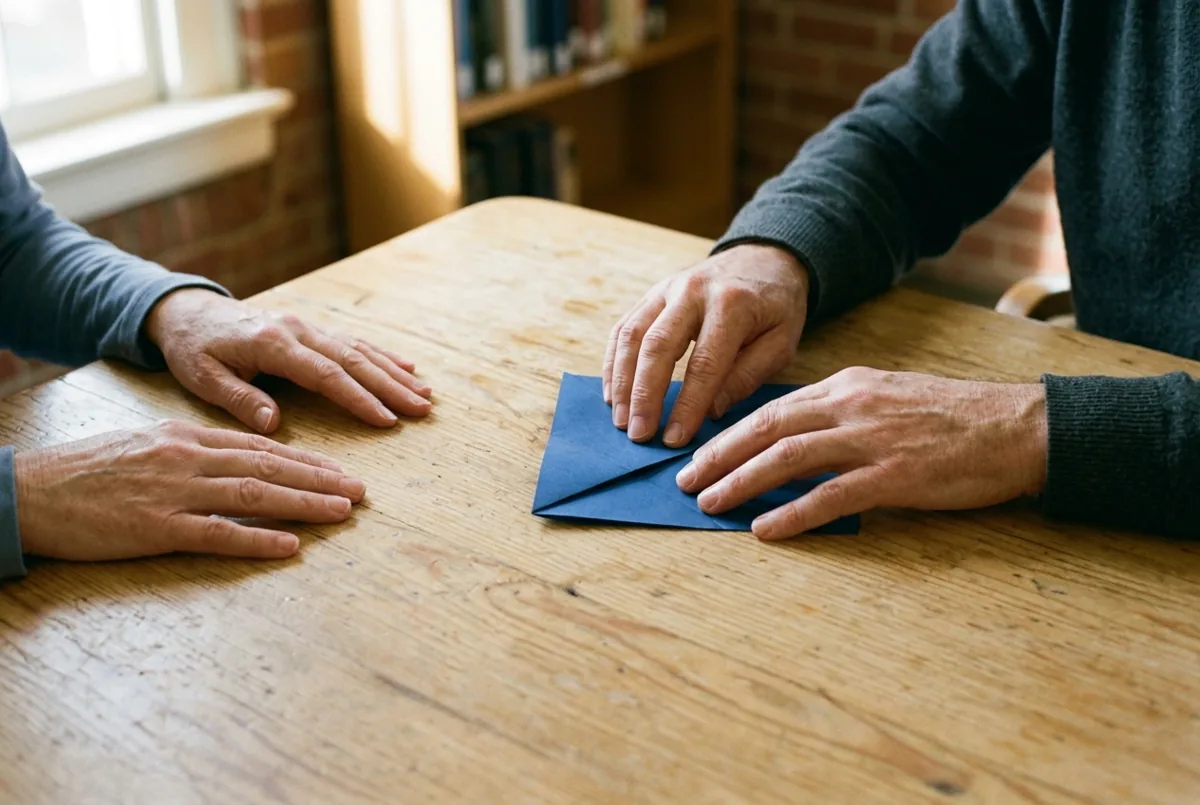
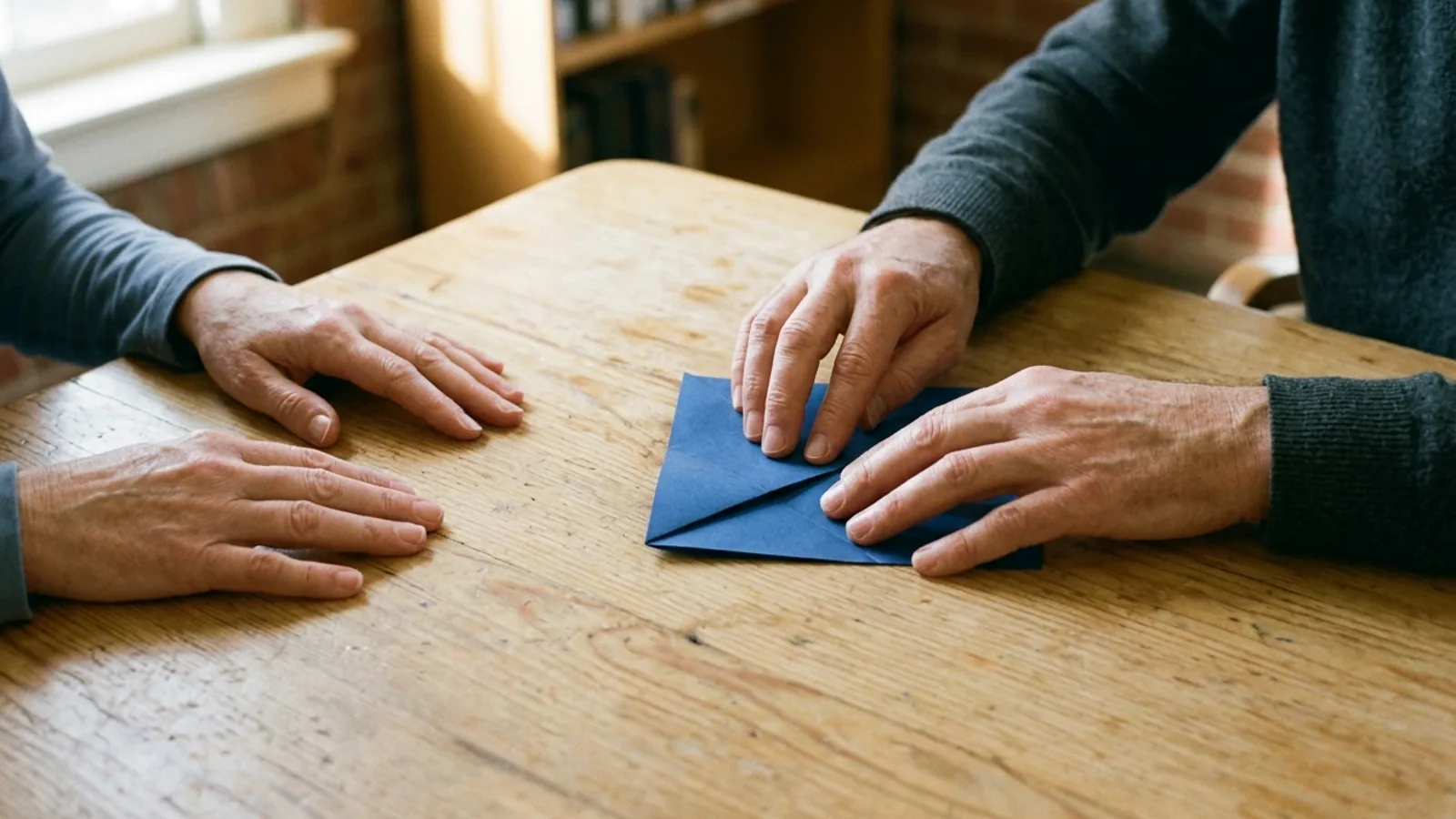
Hands working with blue paper on a wooden table beside resting hands.
- Identify the model and the behavior available to observe.
- Separate an opportunity to watch from an opportunity to respond.
- Record what happened before proposing why it happened.
- Leave an unknown explanation open until relevant evidence is supplied.
The Learning & Memory guide places this topic alongside conditioning and memory. For a different learning relationship, the classical and operant conditioning comparison traces stimulus pairings and direct consequences.
What separates acquisition from performance?
Acquisition is learning; performance is an observable response under specified conditions. A response is evidence to interpret, rather than a direct reading of everything a person knows. Bandura’s 1965 paper, journal page 593, makes this distinction in the context of its experiment.
OpenStax’s modeling section describes attention, retention, reproduction, and motivation. Use these as questions when reading an example:
| Process | Question to ask about the account |
|---|---|
| Attention | Was the relevant action available to notice? |
| Retention | What later response could show that information was retained? |
| Reproduction | Were the materials and means to perform the action available? |
| Motivation | What might encourage or discourage displaying it here? |
In the textbook account, consequences observed happening to the model are vicarious; consequences following the observer’s own action are direct. Do not merge those histories. Seeing a demonstration also does not guarantee that the observer learned it.
Compare two fictional paper-folding cards
Both cards supply the same demonstration and change the context for responding. Everything in these cards is invented for discussion, including the later outcomes. Read them on paper; no one needs to perform for classmates.
Shared setup: Two fictional university students, Ari and Ren, watch the same unobstructed demonstration. A tutor folds a plain square diagonally, opens it, then brings one corner to the center crease. Neither student has handled the paper during the demonstration. The account supplies no record of their prior folding experience or moment-to-moment attention.
Card A — public invitation: Immediately afterward, both receive identical paper and an invitation to show the fold to the group. Ari reproduces the sequence. Ren leaves the paper untouched. Ren says, “I would rather try somewhere quiet.” The story gives no other response or explanation at this point.
Card B — later private opportunity: Later, both receive fresh identical paper and the same request separately, without an audience. The account stipulates that there was no extra demonstration, feedback, practice, or new folding instruction between the occasions. Both reproduce the sequence. These are supplied story facts, not collected data.
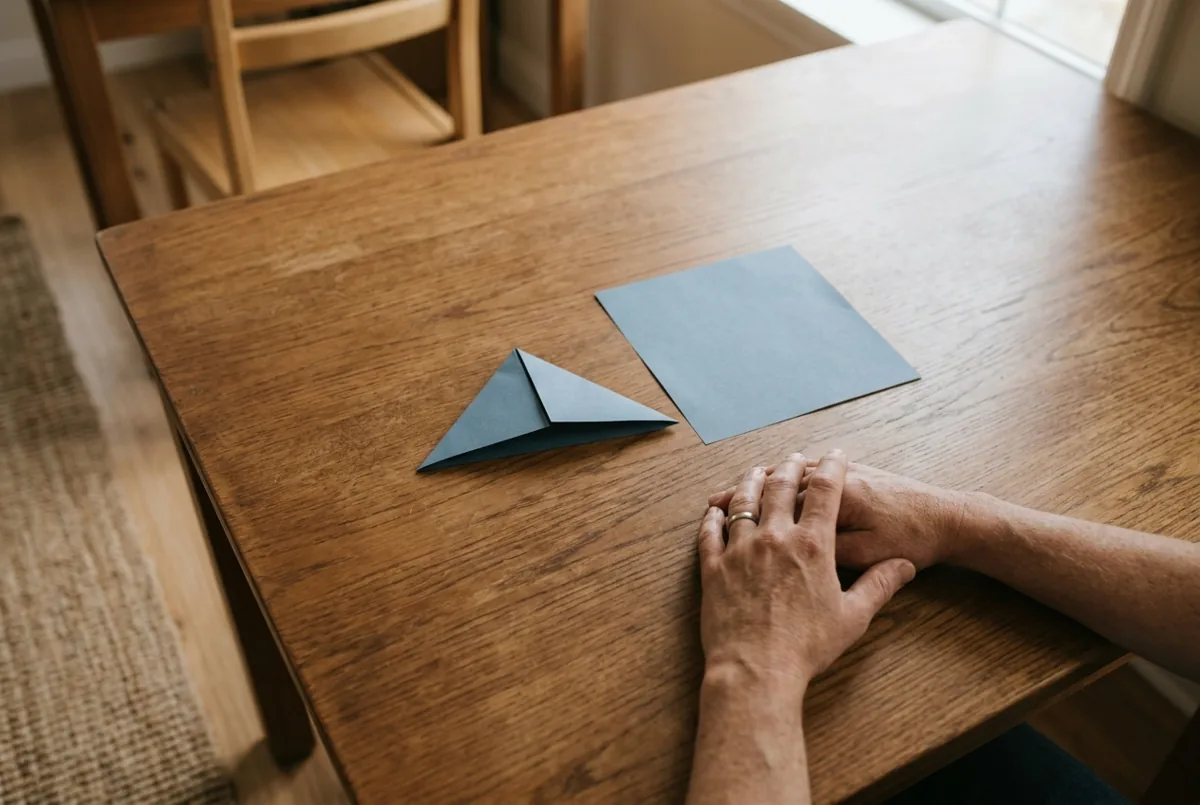
Resting hands beside unfolded and folded blue paper on a wooden table.
Before reading the answer: Does Card A establish that Ren failed to acquire the sequence? What does Card B add? Which explanation is still unresolved?
Instructor answer: Card A supplies no performed fold from Ren, so it leaves acquisition unresolved. Card B adds an independent reproduction after the demonstration, with no intervening instruction in the story. That is compatible with learning before the public invitation. Ren’s statement makes the audience a plausible performance-related explanation; it does not establish the cause of the change. Prior experience also remains unknown. Do not turn the difference into a label about Ren’s ability or personality.
Complete the observation and evidence record
Record exposure and performance separately, then state what the account permits and leaves open. Use the operational-definition worksheet if “copied it” needs a more precise response definition.
Tables scroll horizontally on narrow screens. For these cards, define the target as completing the supplied fold sequence without another demonstration. The photographs show paper and hands; they do not document either character or establish that the pictured sequence meets that definition.
| Observation opportunity | Performance opportunity and response | Evidence available | Alternative explanation or missing evidence |
|---|---|---|---|
| Ren: same visible demonstration | A: identical paper, public invitation; no attempt | No displayed sequence in that context | Attention, prior experience, and willingness unresolved; silence does not establish no acquisition |
| Ren: earlier demonstration, no added instruction stipulated | B: private request; reproduces sequence | Later independent performance is compatible with earlier acquisition | Audience, delay, and occasion changed together; cause not isolated; prior experience unknown |
| Ari: same visible demonstration | A and B: reproduces sequence | Performance supplied on both occasions | Does not establish the demonstration was necessary; prior experience unknown |
Blank worksheet: Copy the table below for another fictional example. An empty cell means information is missing; it does not mean the behavior occurred zero times.
| Observation opportunity | Performance opportunity and response | Evidence available | Alternative explanation or missing evidence |
|---|---|---|---|
| Model, action, view of demonstration: ______ | Materials, request, context, actual action: ______ | What the response supports: ______ | What remains unknown: ______ |
| Later exposure or added instruction: ______ | Later opportunity and action: ______ | What the later record adds: ______ | What changed besides the proposed cause: ______ |
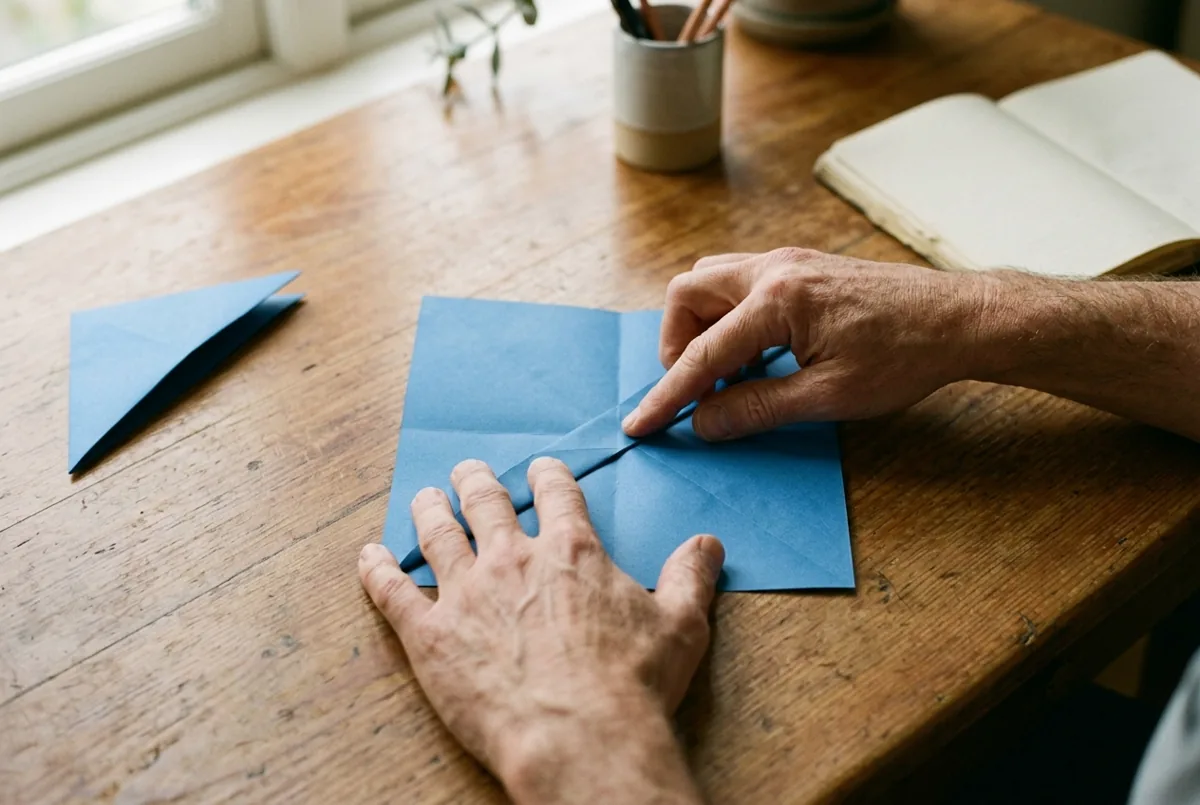
Hands folding a blue paper square beside a folded blue triangle.
Teacher check: If the story instead supplied a new demonstration before Card B, the later response would no longer isolate information available before Card A. If prior competence were supplied, successful folding might reflect an existing skill. Neither a failure nor a success settles the learning history on its own.
Read Bandura’s page 593 with a clear boundary
The historical study supports separating acquisition and performance under its conditions, alongside an explicit caution about exposure. Bandura’s 1965 paper examined children observing an aggressive filmed model with different consequences. Its abstract reports that a later incentive condition removed earlier group differences in displayed imitation. This is a source-reading task; do not reenact the aggressive procedure.
Open PDF page 5, printed journal page 593, headed “Acquisition-Performance Differences,” then read the opening “Discussion” paragraphs. The discussion attributes the experimental difference to performance rather than acquisition, while warning that mere exposure is insufficient for observational learning.
Reading prompt: What would be lost if a summary stopped at the first difference in displayed imitation? Which nearby sentence limits a claim that watching guarantees learning?
Instructor answer: It would omit later evidence used to distinguish learning from performance. The exposure caution blocks that guarantee. This experiment does not establish identical acquisition for every observer, skill, or setting, or validate the paper-folding cards.
What should you conclude when someone does not imitate?
Conclude only that the target response was not displayed in the recorded opportunity. Use the worksheet to identify whether the account leaves exposure, materials, instructions, prior skill, or willingness unresolved. These are candidate gaps to investigate, not explanations already established.
For the fictional cards, finish with: “Ren did not attempt the public fold, later reproduced the sequence privately, and the account does not isolate why performance changed.” Then list which additional comparison would address your chosen explanation. The guide to reading a psychology study helps distinguish an interpretation from a causal conclusion.
Method and sources
The cards, worksheets, and answer explanations are original editorial teaching materials based on the two linked sources, accessed October 15, 2026. The paper reading uses the original scanned journal pages, especially pages 589 and 593. No participant responses were collected, and no classroom learning effect is claimed. This resource provides general psychology education, not clinical assessment or treatment advice.
Updated October 2026.