perception cognition
Stroop Effect Demonstration: Plan the Conditions and Debrief the Result
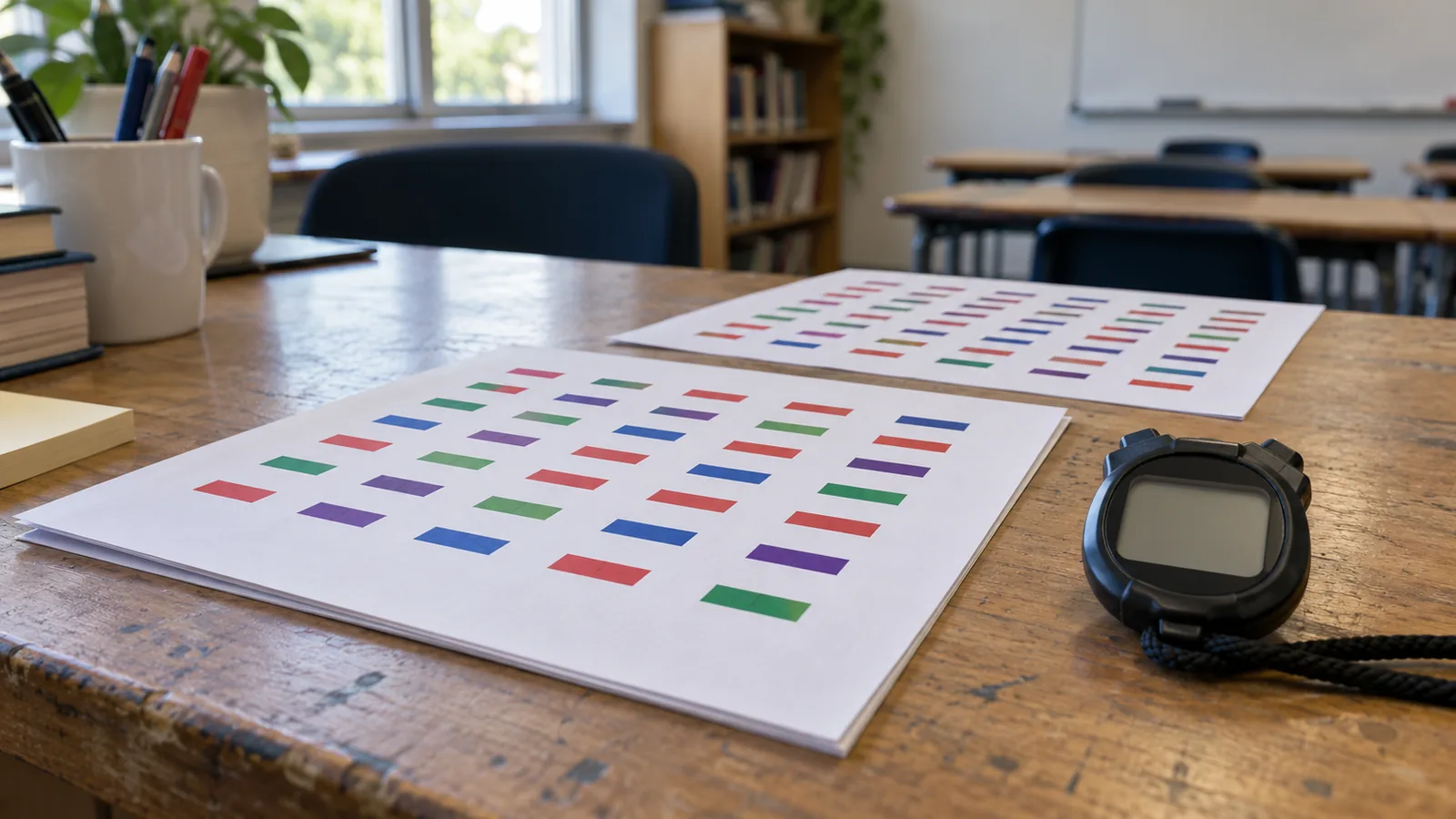
Plan a paper color-naming demonstration with condition and order sheets, blank timing and error records, an observer option and a bounded debrief.
What reaches awareness?
Sensation, perception and cognition offer different ways to examine an everyday experience. This guide helps you distinguish incoming sensory information, its interpretation and the processes involved in attention and thinking.

Sensation concerns the detection of physical stimuli through sensory systems. Perception concerns how sensory information is organized and interpreted. The distinction matters when describing an illusion: an unusual experience does not by itself show that a sensory organ is malfunctioning. Consider the stimulus, the surrounding context and what the observer was asked to do.
An attention or cognition demonstration can involve several processes at once. For a Stroop-style task, distinguish reading a word from naming a color. Compare instructions and response requirements before interpreting any difference. Use an example to discuss a hypothesis rather than presenting a single person’s timing as a measure of intelligence or ability.
Perception activities can illustrate a concept without proving that everyone experiences it in the same way. Accessibility, prior knowledge, language and instructions can affect a classroom task. Offer a paper explanation or observer role, and avoid asking students to reveal a diagnosis or explain a sensory difference in public. Record the limits alongside the observation.
Textbook starting point: OpenStax Psychology 2e. Educational material; not diagnosis or treatment advice.